Pond Algae Control
Reduce organic matter to manage algae bloom in bodies of freshwater.
Eliminate Algae’s Food Source
Algae in ponds, lakes, and lagoons signal an imbalance in your aquatic ecosystem – driven by excess nutrients, decaying organic matter, and limited microbial activity. At Bacteria Direct, we use natural, bacterial-based solutions like Clarify™ to control algae by attacking its food source, not just masking symptoms
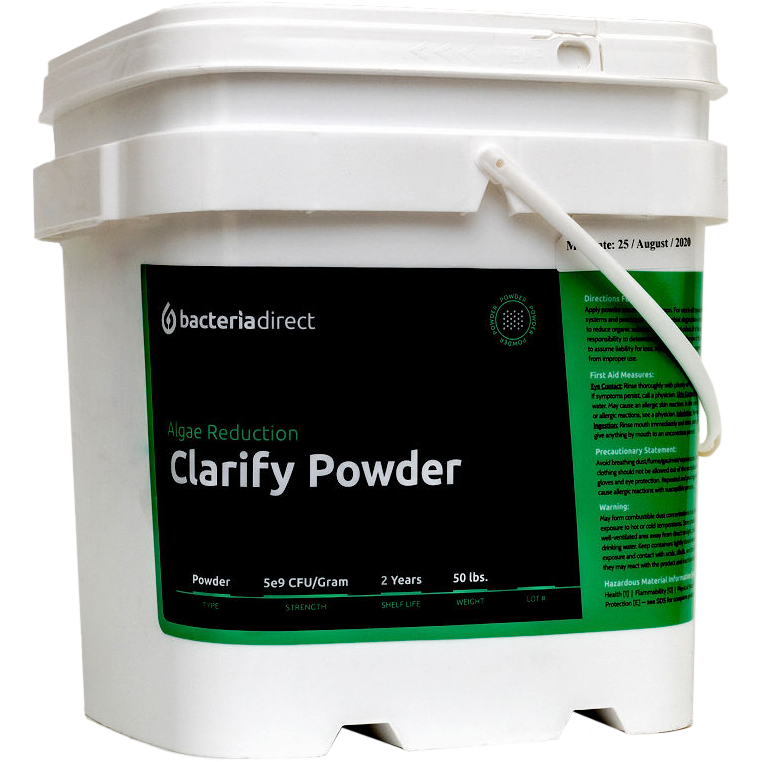
What is Clarify™
Clarify™ is a specialized powder formula comprised of bacillus spores engineered to thrive in the diverse pH and temperature conditions. It targets organic debris, sludge, and cellulose, helping to restore clarity and aquatic balance
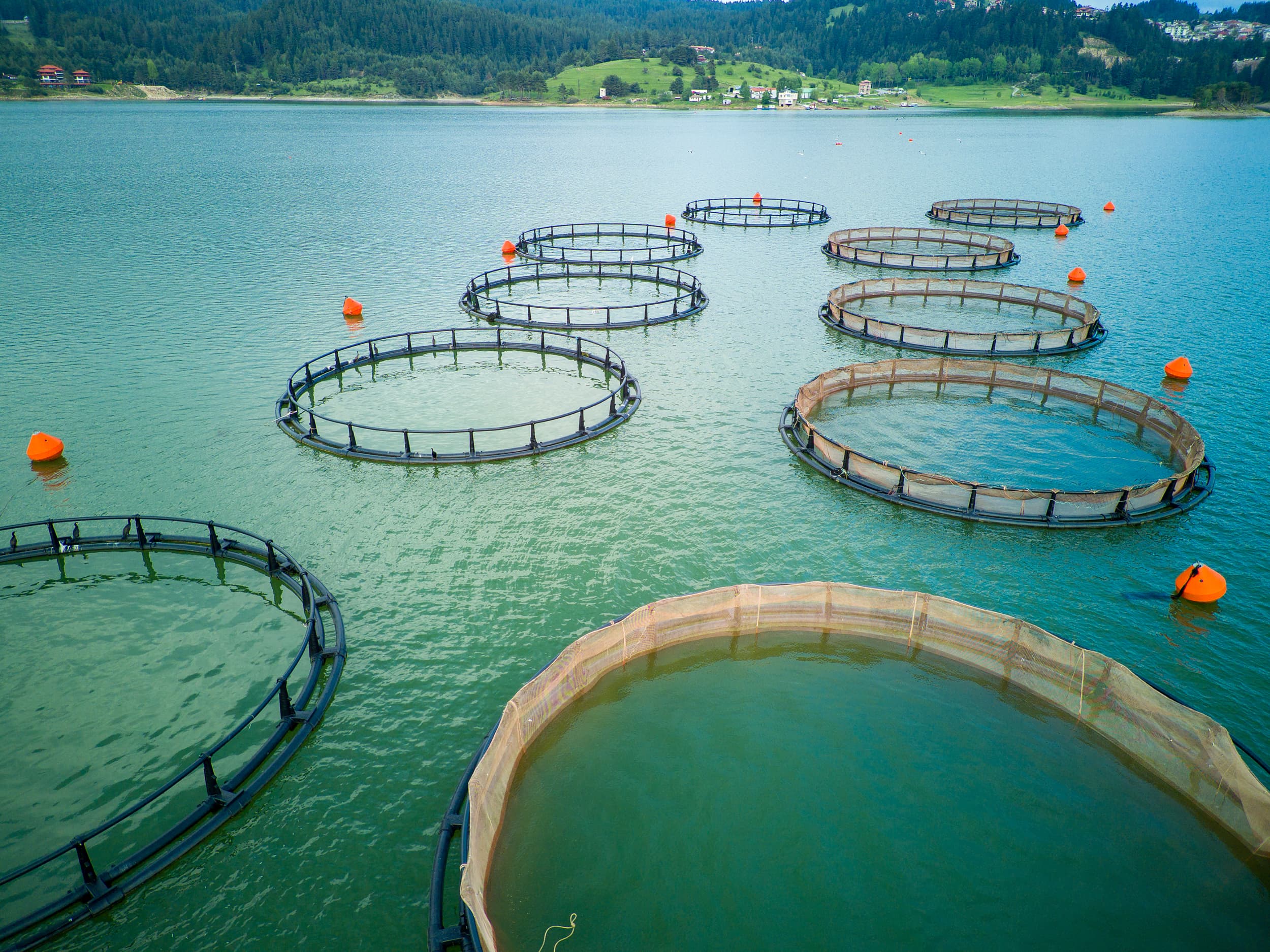
Applications




Application & Activation
Microbes are introduced; they become active in the environment.
Organic Degradation
Microbes digest accumulated organic matter and sludge.
Nutrient Reduction
Consumption of nitrogen, phosphorus, carbon reduces nutrient load.
Algae Suppression
With less available “food”, algae growth slows and water clarity improves.
Why Choose Bacteria Direct?

- Long-term sustainable control (versus recurring algaecide sprays)
- Safe for fish, aquatic plants, and the environment
- Helps regulators meet effluent and clarity standards
- Reduces energy costs by lowering aeration needs
- Proven in diverse settings
Pond Algae Frequently Asked Questions
Algae blooms are usually driven by excess nutrients like nitrogen, phosphorus and potassium in the water. These nutrients come from decaying organic material, runoff, animal waste, or wastewater discharge. When nutrient levels are high, algae can grow rapidly and reduce water quality.
Unchecked algae growth can cloud water, reduce dissolved oxygen, harm fish and aquatic life, create odors, and interfere with irrigation or filtration systems. It also makes it harder for treatment facilities to meet quality standards.
Severity is typically judged by water clarity, nutrient concentrations, frequency of blooms, and impacts on system performance or aquatic life. Regular water testing and visual checks help gauge conditions and guide treatment decisions.
Absolutely. Algae control is most effective when integrated with overall water quality practices, including nutrient management, aeration, sediment control, and regular monitoring. It’s not just a single fix but part of maintaining healthy water systems.
Clarify™ Specifications
See complete specs for Clarify™.
How much do I need?
Calculate my Clarify™ dosage needs.